By Kristen
Google just made it clear: the future of commerce is conversational, agentic, and deeply integrated into AI.
In February 2026, Google announced it is testing a new shopping ad format inside AI Mode — a major signal that the traditional search ad experience is evolving into something far more assistive and personalized.
At the same time, Google Ads & Commerce VP Vidhya Srinivasan released her third annual industry letter outlining how AI will reshape digital advertising in 2026.
If you manage paid media, ecommerce, or retail growth — this is not incremental. This is structural.
Let’s break down what’s happening and what it means.
Search Is No Longer Just Search
Search is shifting from keyword-based queries to conversational exploration.
Consumers are:
- Brainstorming ideas
- Uploading images
- Asking complex comparison questions
- Expecting instant clarity
Google’s response?
AI Mode.
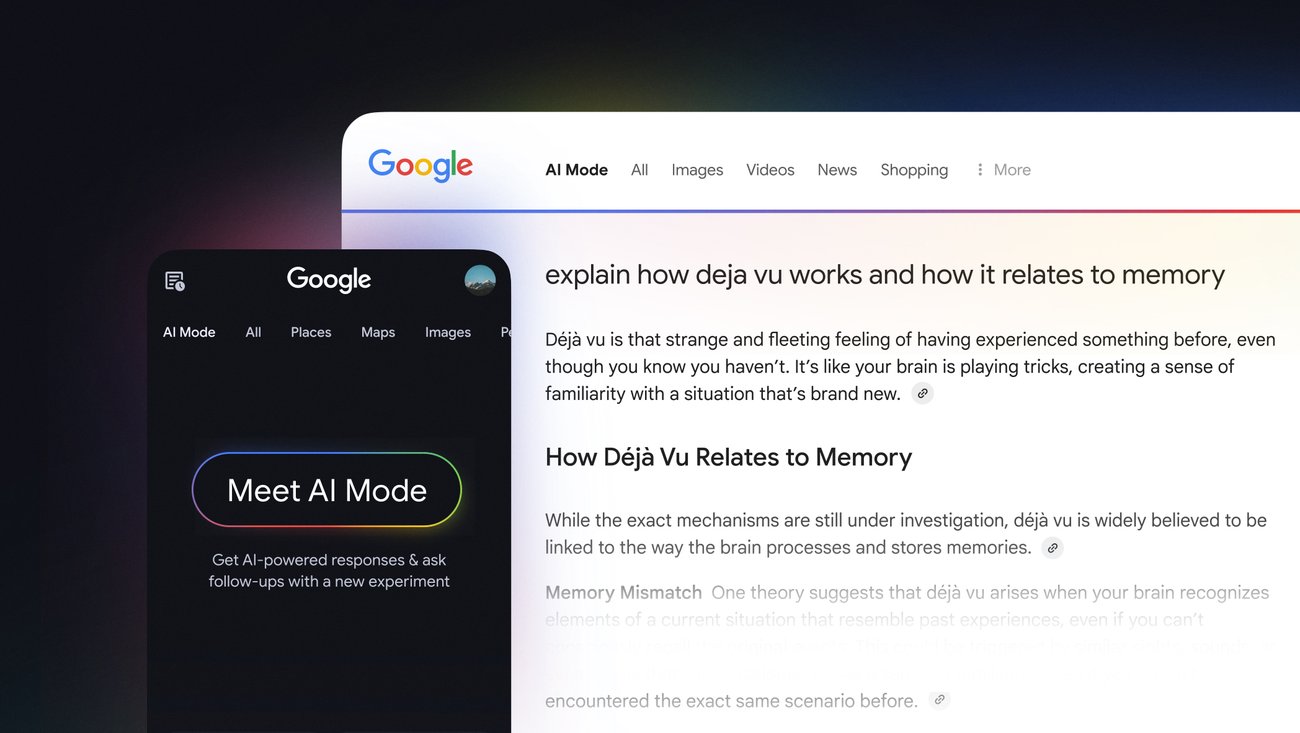
AI Mode is designed to allow users to compare brands and stores directly within a conversational interface — blending discovery and decision into one experience.
Now, Google is testing a new sponsored shopping format within AI Mode, clearly labeled, that allows retailers to appear naturally within those moments of product comparison.
This is not a banner ad.
This is embedded commerce inside AI dialogue.
What the New AI Shopping Ad Format Looks Like
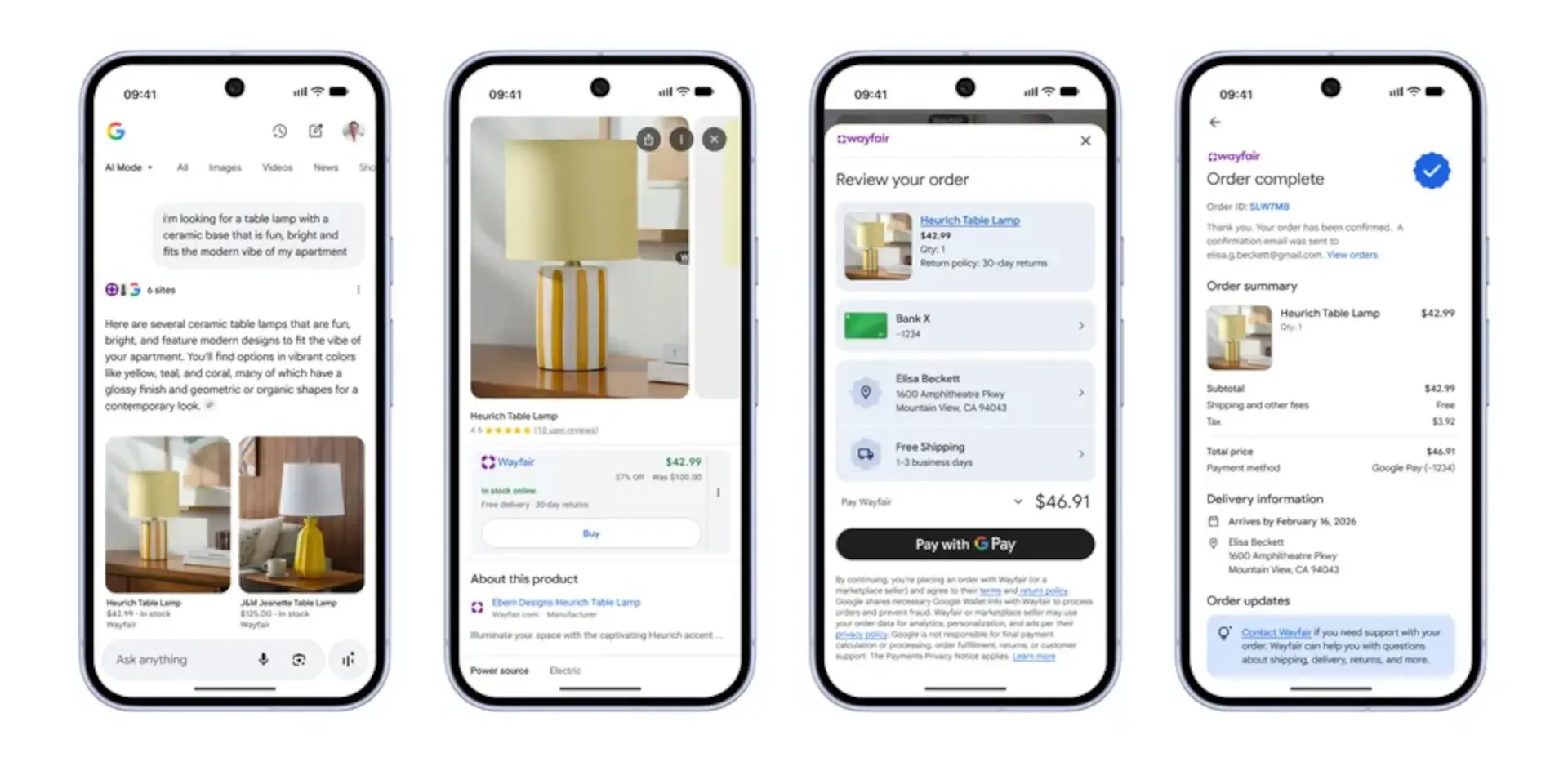
Here’s how the experience works:

4
- Users ask a product-related question.
- AI Mode provides organic product recommendations.
- Sponsored retailer placements appear beneath organic results.
- Users can compare stores instantly.
- Buying options are surfaced directly within the interface.
The intent here is clear:
Reduce friction between inspiration and transaction.
For retailers, this introduces a new “consideration-stage” insertion point — earlier than traditional shopping ads, but closer to decision than top-of-funnel display.
Direct Offers: Closing the Sale Inside AI
Google also introduced Direct Offers inside AI Mode.
This allows brands to:
- Deliver tailored offers in real time
- Provide loyalty benefits
- Bundle products
- Incentivize purchase without changing public pricing
In other words:
Dynamic deal-making within the AI conversation.
For performance marketers, this means conversion strategy is moving upstream — into discovery moments rather than relying solely on cart abandonment or remarketing.
Agentic Commerce Is Live
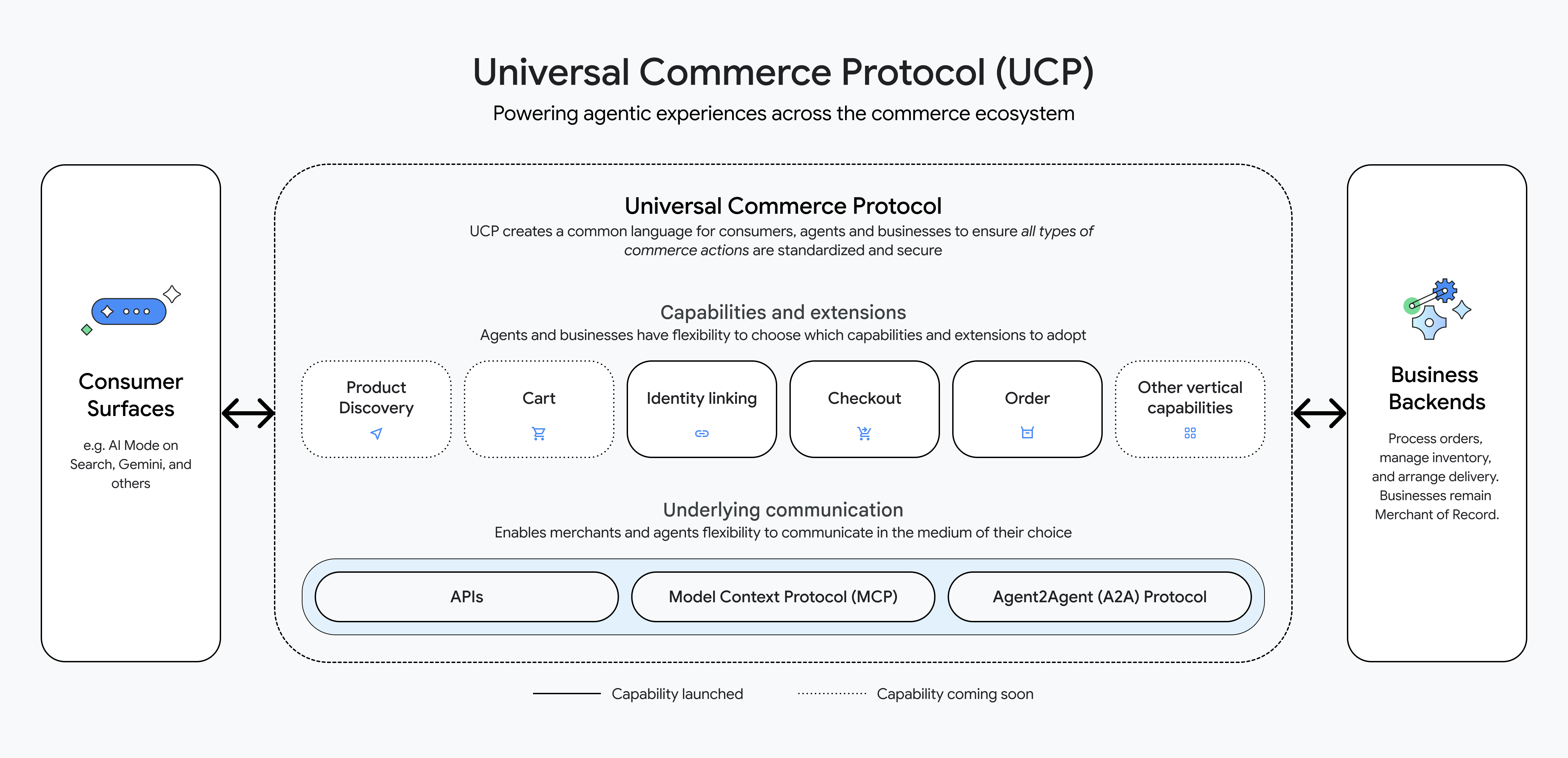
The biggest structural change is Google’s Universal Commerce Protocol (UCP) — an infrastructure layer that enables AI agents to complete purchases directly within AI Mode and Gemini.
4
UCP enables:
- Secure identity verification
- Embedded checkout
- AI-assisted purchasing
- Direct retailer integrations (Etsy, Wayfair live; Shopify, Target, Walmart coming)
This is the transition from:
“Click → Website → Browse → Checkout”
To:
“Ask → Compare → Confirm → Buy”
Inside the AI layer.
For advertisers, this means the storefront may not always be your website.
YouTube: From Influence to Impact
Google also made it clear that YouTube will play a central role in this ecosystem.
As the #1 most-watched streaming platform in the U.S., YouTube creators are becoming commercial accelerators.
In 2026, Google is:
- Using AI to match brands with creator audiences
- Converting organic creator trust into measurable business impact
- Deeply analyzing content context and viewer behavior
The creator economy is no longer just awareness — it’s becoming structured performance infrastructure.
Gemini 3 and AI-Generated Creative at Scale
Gemini 3 now powers Google’s ad tools.
That means:
- AI-generated creative at scale
- Image-to-video transformations
- Studio-quality production via Nano Banana and Veo 3
- 70 million AI-generated assets created in Q4 alone
Creative production is becoming automated.
Performance leverage is shifting toward:
- Signal quality
- Offer strength
- Data structure
- Commerce integrations
What This Means for Advertisers in 2026
Here’s the strategic takeaway:
- Ads are becoming assistive, not interruptive.
- Commerce is moving inside AI environments.
- Checkout friction is being removed.
- AI agents will act on behalf of consumers.
- Measurement stacks must evolve to support this model.
If you are still thinking in terms of:
- Keywords
- Landing page CRO
- Manual creative cycles
You are thinking in the previous era.
The new playbook requires:
- Feed optimization
- Structured product data
- Offer architecture
- Conversational query modeling
- AI-integrated checkout readiness
The Bigger Shift
This is not about “another ad format.”
It’s about the evolution of:
- Discovery
- Consideration
- Transaction
- Identity
- Payment
- Trust
Google is building the infrastructure layer for agentic commerce.
The question for brands is:
Are you optimizing for traffic?
Or are you optimizing for AI-mediated purchase intent?
Final Thought
In 2026, speed and certainty are no longer trade-offs.
AI is collapsing the funnel.
For performance marketers, the opportunity isn’t just more reach.
It’s influence at the exact moment of decision — inside the interface where decisions are made.
The brands that win won’t just buy media.
They’ll architect commerce for AI.

Kristen is a New York–based digital marketing strategist and industry voice specializing in scaling high-growth brands through performance-driven advertising. She has managed multi-million-dollar ad budgets across Fortune 500 and emerging companies in entertainment, technology, and consumer markets.
With a strong presence on LinkedIn and digital platforms, she shares insights on paid media strategy, AI-driven marketing, and modern wealth-building through digital leverage. Google Certified and relentlessly data-driven, she bridges the gap between high-level strategy and real-world execution.